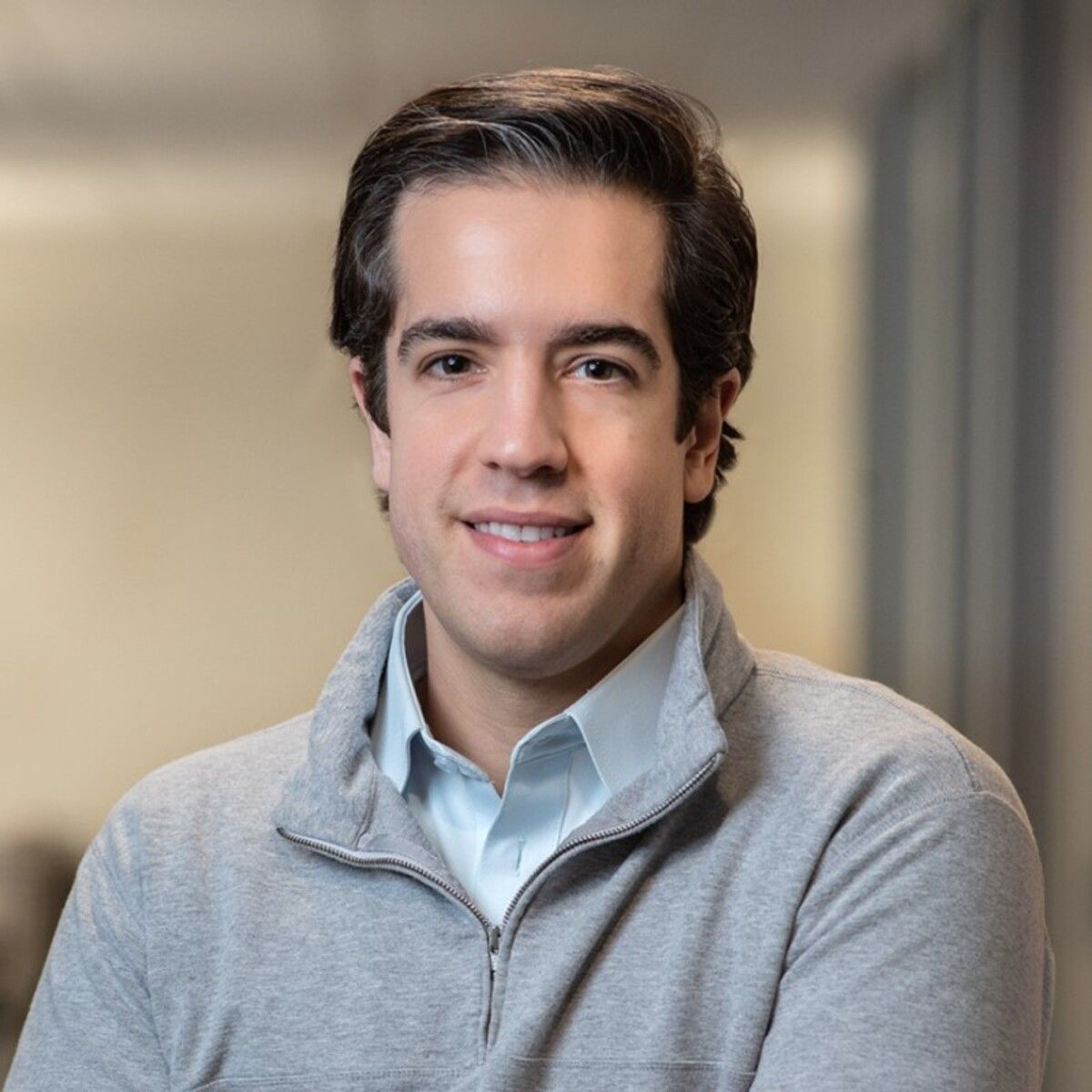

New episode on the Vibescaling Podcast, Billy Gallagher!
Today, we do a little different type of episode, one that answers the two most common questions we get:
How do I choose the right company or startup?
Once I get the offer, how do I think about equity?
Been awesome doing these and have a bunch lined up (see below):
Some of our previous guests:
Todd Busler, CEO @ Champify - see here
Raphael Parker, CRO @ Mandolin (former founding GTM hire @ Segment) - see here
Kyle Parrish, former VP of Sales @ Figma, see here
Liam Mulcahy, GTM operating partner @ Kleiner Perkins, see here
Pat Forquer, CRO @ Legora, see here
Mike Donohue, CRO @ Maven, see here
Tomer Chernia, VP of GTM @ Cursor, see here
Jack Gashi, VP of Sales @ Avoca, see here
Some of our future guests for Season One:
Eleanor Dorfman, Head of Sales @ Anthropic (recorded, in edits now)
Ghazi Masood, CRO @ Replit (recorded, in edits now)
Jason Miller, VP of Sales @ Unify (recorded, in edits now)
Kyle Norton, CRO @ Owner.com (recorded, in edits now)
Jason Gelman, Operating Partner @ Primary Ventures (recorded, in edits now)
Evan Cassidy, VP of Sales @ Decagon (recorded, in edits now)
Mike Heller, Partner @ Floodgate (former Dropbox & Clearbit GTM) (recorded, in edits now)
Rob Saliterman, VP of Sales @ Harvey
Jaquelyn Goldberg, VP of Sales @ Unframe
Mark Ebert, SVP of Revenue @ Profound
& others from our portfolio companies @ vibescaling
And many more in the pipeline - if you know any good leaders who fit this, shoot me a DM on LI or reply to this email. We’ll keep openings rolling and be super open to suggestions for similar guests.
We film in-person in SF & NYC at legit podcast studios and have hired a new post-production agency, so the quality will be high - see below for a snippet in-studio behind the scenes.

Interviewing the awesome Ghazi Masood, CRO @ Replit, in our NYC studio in February
Links To Sections
Episode 10: Billy Gallagher

Billy’s Background
Billy Gallagher is the founder and CEO of Prospect, a robo-advisor that helps startup employees better manage their private company equity.
Think: Wealthfront for startups.
Before Prospect, Billy was on the investing team at Khosla Ventures, where he worked on early-stage deals from seed through Series B, including companies like Stripe, DoorDash, and Instacart. He then joined Rippling as the 34th employee in a generalist "special projects" role, staying for three and a half years as the company scaled to over a thousand people.
Between Khosla, Rippling, a Stanford MBA, and a stint covering startups at TechCrunch, he's seen the startup equity problem from literally every seat at the table.
The gap he kept seeing between how professional investors managed equity at Khosla vs. how employees fumbled through it at Rippling is exactly what led him to start Prospect.
Interesting Takeaways
Investor quality is a signal, not just a badge. It's not just who backed the company, it's who led the round, what stage they're known for, and whether the quality has held up across rounds. A senior partner doubling down is a very different signal than a junior investor writing a small check off their normal path.
The breakout period is Series A through C. Seed is an idea. Google is a machine. The sweet spot is in between, where the risk is being actively de-risked but the upside is still real. Join too early and the odds are stacked against you. Join too late and the upside is already priced in.
Headcount is almost impossible to fake. If the business is growing, the team grows. Look at raw headcount growth, sure, but also look at where they're recruiting from. An early-stage fintech pulling engineers out of Stripe is a different story than one pulling from Oracle.
Second-time founders get a risk adjustment, but it's not a guarantee. The Parker Conrad arc (Zenefits to Rippling) is a good example of someone who found a false peak, came back down, and built something much bigger the second time. That said, a 23-year-old building a consumer app sometimes wins precisely because they don't carry the old playbook.
Speed can't be asked about. It has to be felt. Nobody says they move slow. But you'll know in the first 30 minutes of an interview process. Are they pulling in other team members mid-call? Are they offering an offer by Friday? Speed in hiring is speed in everything.
The castle in the clouds AND the quarter-by-quarter path. Great founders can do both. Most can't. The test isn't whether they can paint the big vision, it's whether they can then walk you through exactly how they plan to get there, step by step.
Secondary market pricing tells you things the pitch deck won't. For companies over $5B, secondary market prices are directional signals. A company that hasn't raised in two years but holds its secondary price is very different from one trading at a 50%+ discount to its last preferred round.
Options vs. RSUs isn't just a preference question. Early stage you're getting options, which can be tax-advantaged but require decisions. Later stage you're getting RSUs, which are simpler but less flexible. Knowing the difference before you negotiate matters.
QSBS is one of the most underused tax breaks in startups. If the company has under $75M in assets, you may qualify for up to $15M in tax-free proceeds. Early exercise locks in your eligibility before the company crosses that threshold. Most employees miss this entirely.
The 90-day exercise window is a golden handcuff in disguise. If it costs you $300K to exercise your options and you want to leave, you probably can't. Companies with 2, 5, or 10-year post-termination windows are giving you actual freedom. Ask for it, and look for it as a signal of how the company treats employees.
The 20% rule on tender offers. Selling 20% in a tender is a reasonable default. You lock in something real, you stay almost entirely in, and if the company goes to zero you didn't go down with every chip on the table. Any financial advisor would still tell you 80% of your net worth in a single private company is plenty of exposure.
The talent vortex compounds. The best companies become black holes for talent. Getting into a Stripe in 2015 or an Anthropic today means easier selling, better colleagues, and a network that follows you for the rest of your career. The soft landing if it doesn't work out is the people you worked alongside.
Discussed In This Episode
The quantitative signals that separate great startups from good ones: investors, headcount growth, web traffic, and secondary market pricing
Why who leads the round matters and the practical difference between a senior partner vs. a junior investor
The "breakout period": why Series A through C is the best risk-adjusted window to join a startup
Second-time founders vs. first-time founders (and when youth actually wins)
Talent density as a leading indicator: where a company recruits from tells you more than their pitch deck
The qualitative test: can the founder paint the castle in the clouds AND the quarter-by-quarter path to get there?
Why speed is the hardest thing to fake — and how you spot it in the interview process
Options vs. RSUs, early exercise, QSBS, and the tax strategies most employees miss
Golden handcuffs: why longer post-termination exercise windows matter more than people realize
The 20% rule: how to think about selling equity in a tender offer without losing your upside
Timestamps
(00:00) Intro & Billy's path from Khosla Ventures to Rippling to founding Prospect
(03:44) How to evaluate a startup quantitatively: investors, headcount, web traffic
(05:14) Why the lead investor's seniority level matters more than the firm name
(07:14) Tracking investor quality across rounds (and when it's a red flag)
(09:17) The rise of the solo GP and what it signals for employees
(10:18) Second-time founders vs. first-time founders: when experience is an edge
(12:10) The Ramp example: hitting a double, staying hungry, then hitting a grand slam
(13:27) Tools for researching startups: Prospect, Crunchbase, and what to look for
(17:30) Headcount growth as a proxy for business growth
(19:54) Secondary market signals: what they tell you about a company between rounds
(22:14) When a fundraising gap is a red flag vs. a sign of capital efficiency
(24:46) The breakout period: why Series A–C is the best risk-adjusted time to join
(30:23) Qualitative signals: founder vision, speed, and the talent vortex
(32:07) How to spot a fast-moving founder without asking a single question
(34:00) Talking to customers: developing taste for product-market fit
(36:42) Market timing and the Paul Graham test: it should feel almost too late
(39:53) Equity 101: options vs. RSUs and when you'll get each
(41:50) QSBS and early exercise: the tax advantages most employees miss
(43:59) Post-termination exercise windows: why 90 days is no longer acceptable
(47:38) Percent ownership: how to benchmark your equity offer
(49:23)Tender offers and the 20% rule: taking chips off the table without losing upside
(52:24) What Prospect does and how to use it to navigate your equity lifecycle
Thanks for tuning in!
If you enjoy it, please give us a rating, review, or follow on Spotify/YouTube/Apple Podcasts - it really helps us grow this.
For those who are new, my name is Chris Balestras, partner @ Vibescaling - a GTM advisory, recruiting, media, and investing firm, working with seed through series C AI-natives to help them grow.
Where to find Vibescaling:
We work with many of the hottest AI-native startups in various capacities, and for those who are interested, shoot me an email at [email protected] or a DM on LI.
🫡 cheers,
Chris